DEVELOPMENT OF STUDENTS’ MONOLOGUE SPEECH EXPRESSION SKILLS
DOI:
https://doi.org/10.2024/sk5tx649Keywords:
thoughts, views, beliefs, actions, preventing action, emotional-evaluative issueAbstract
Monologue speech is, as is known, the speech of one person expressing in a more or less detailed form his thoughts, intentions, assessment of events, etc. One of the tasks put forward by the program is teaching monologue speech. The goal of training is to develop monologue speech skills, which are understood as the ability to express one’s thoughts orally in a communicatively motivated, logically consistent and coherent manner, sufficiently complete and linguistically correct. This position seems erroneous, since it is this aspect of training that disciplines thinking, teaches one to think logically and, accordingly, construct one’s statement in such a way as to convey one’s thoughts to the listener.
References
Tasheva Dilorom, Djanzakova Matluba. The role of literary text in teaching the Russian language. International Multidisciplinary Conference. Manchester, England. 25th December 2023. -p.19. https://conferencea.org
Tasheva, D. (2022). Methods Of Using Didactic Materials to Enhance Activities in The Russian Language Lessons. Ta'lim va rivojlanish tahlili onlayn ilmiy jurnali, 2(1), 325-328.
Shaymanova, Y. T., & Qarshiboyeva, Z. A. (2022). Rus olimi an samoylovichning sharq tillarini o'rganishga qo’shgan hissasi. Oriental renaissance: Innovative, educational, natural and social sciences, 2(Special Issue 24), 365-372.
Shaymanova, Y., & Qarshiboyeva, Z. (2023). O‘zbek tilidagi neologizmlarning tasnifi Classification Of Neologisms In The Uzbek Language. Qishloq xo'jaligi, atrof-muhit va barqaror rivojlanish milliy konferensiyasi, 93-96.
Yulduz, S. (2023). Baho mazmunini ifodalovchi birliklarning gap tarkibida ifodalanishi. Qishloq xo'jaligi, atrof-muhit va barqaror rivojlanish milliy konferensiyasi, 48-51.
Abduvaxabovna, K. Z. (2022). Some Lingpoopetic Features of Rhetorical Interrogative Sentences. Galaxy International Interdisciplinary Research Journal, 10(4), 721-724.
Ullieva, S. (2022). Historical and comparative characteristics of zoonyms in the Uzbek and Russian languages. Евразийский журнал академических исследований, 2(6), 520-523.
Khaydarovna, Ullieva Sanobar, Umarova Dilfuza Mamatkulovna, and Allayarova Dilfuza Klichevna. "Artistic Character as a Personality Model: Methods of Linguistic Representation Of The Human Image." The Seybold Report (2023).
Mamatkulovna, U. D. (2023). Analysis of Pedagogical Aspects in the Study of the Problem of Bilingual in Teaching the Russian Language. Periodica Journal of Modern Philosophy, Social Sciences and Humanities, 17, 94-96.
Kholbaeva D.D., Tasheva D.S. Pedagogical techniques and methods of forming interest in the lessons of the Russian language. Web of scientist: international scientific research journal, ISSN: 2776-0979, Volume 3, Issue 3, Mar., 2022. -p.238
Kholbaeva, D., & Tasheva, D. (2022). Theoretical And Practical Aspects of Monitoring the Acquisition of Knowledge, Skills and Abilities by Students in The Russian Language in Universities. Евразийский журнал социальных наук, философии и культуры, 2(11), 115-118.
Tasheva, D. (2022). Methods Of Using Didactic Materials to Enhance Activities in The Russian Language Lessons. Ta'lim va rivojlanish tahlili onlayn ilmiy jurnali, 2(1), 325-328.
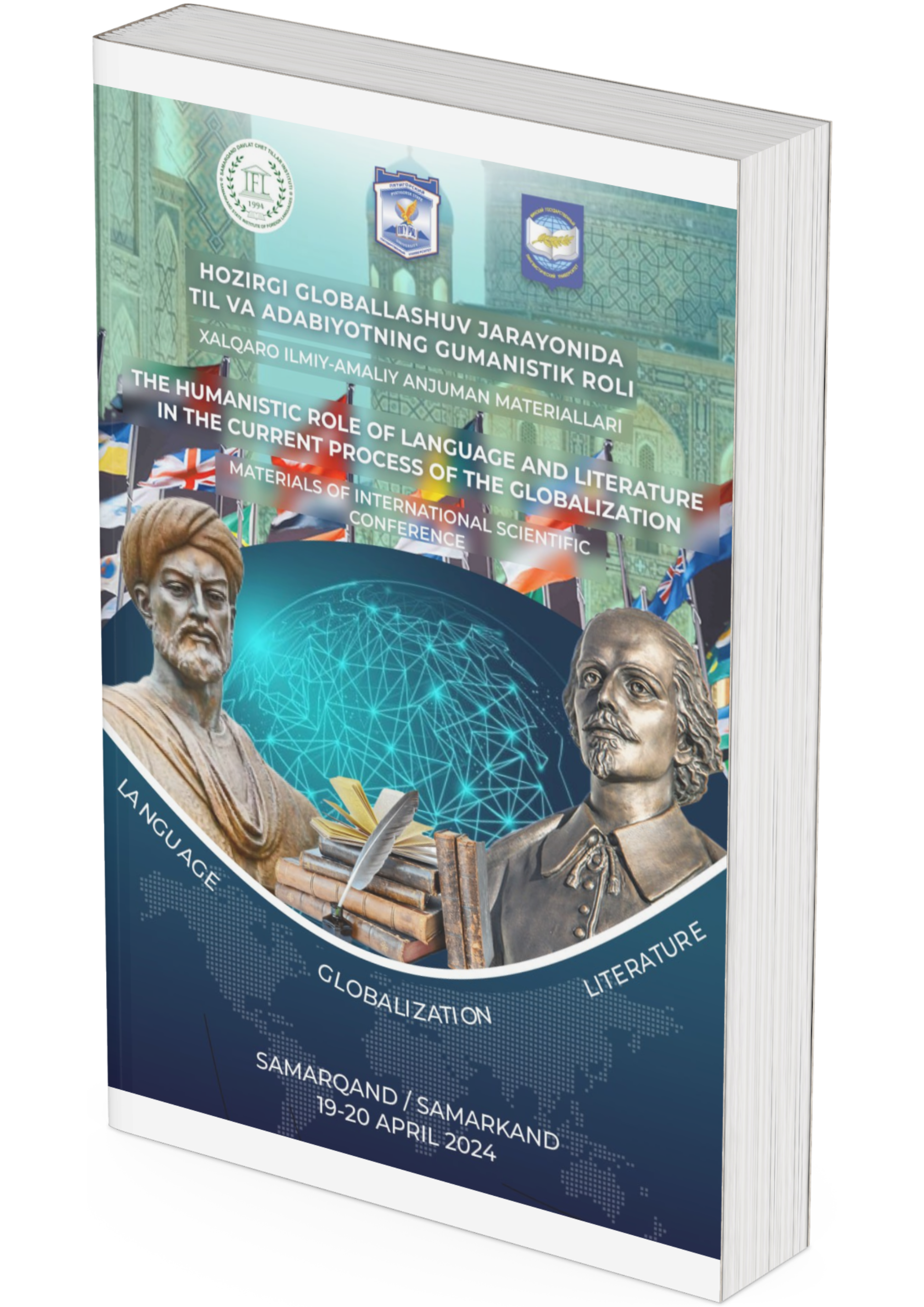
Downloads
Published
Conference Proceedings Volume
Section
License
Copyright (c) 2024 Shaxlo Atakulova (Author)

This work is licensed under a Creative Commons Attribution 4.0 International License.
How to Cite