DEVELOPING STUDENTS` LANGUAGE IDENTITY THROUGH TEACHING COGITATING AND COMMUNICATING IN A FOREIGN LANGUAGE
DOI:
https://doi.org/10.2024/p4jgn402Keywords:
professional education, foreign language, language personalityAbstract
The purpose of this study is to consider the process of forming the student's linguistic personality by teaching the thinking skills of information interpretation and communication within the framework of the technology of critical thinking development. This goal is conditioned by the need to develop the student's ability to think not only in the native language, but also in a foreign language for further successful implementation of educational activities. The scientific novelty of the study lies in the consideration of the possibility of using techniques related to the technology of critical thinking development for the development of thinking and communication skills in a foreign language contributing to the formation and improvement of language personality of students of higher educational institutions. The result of the study is a set of tasks developed within the framework of critical thinking technology, which allows teaching students thinking skills of systematisation of information and communication in a foreign language, thereby contributing to the formation of student's linguistic personality.
References
Brejnev V.V. Soderjanie i struktura informasionnoy kompetentnosti starsheklassnika / V.V. Brejnev // Uchenie zapiski. Elektronniy nauchniy jurnal Kurskogo gosudarstvennogo universiteta. — 2010. — № 4 (16). — S. 170-175.
Dan'shina Ye.V. Informasionnaya kompetentnost' kak pedagogicheskaya kategoriya / Ye.V. Dan'shina // Molodoy ucheniy. — 2009. — № 10 (10). — S. 348-349.
Zimnyaya I.A. Klyuchevie kompetensii – novaya paradigma rezul'tata obrazovaniya / I.A. Zimnyaya // Psixologiya obucheniya. — 2003. — № 12. — S. 34-44.
Ivanovskaya M.N. Informasionno-kommunikasionnaya kompetensiya kak usloviya professional'nogo stanovleniya lichnosti / M.N. Ivanovskaya // Mir nauki, kul'turi, obrazovaniya. — 2011. — № 6-2 (31). — S. 209-211.
Ivansova Ye.V. O termine «yazikovaya lichnost'»: istoki, problemi, perspektivi ispol'zovaniya / Ye.V. Ivansova // Vestnik Tomskogo gosudarstvennogo universiteta. — 2010. — № 4 (12). — S. 24-31.
Kropotkina O.D. Osobennosti formirovaniya lichnosti budushego spesialista v prosesse obucheniya inostrannomu yaziku v politexnicheskom VUZe / O.D. Kropotkina, T.P. Frolova // Novie issledovaniya v obrazovanii. — 2021. — № 4. — S. 171-178.
Lavrenina A.N. Obobshenie i sistematizasiya kak faktori formirovaniya sistemi znaniy, umeniy i navikov v prosesse obucheniya fizike v texnicheskom vuze / A.N. Lavrenina // Nauka i obrazovanie: novoe vremya. — 2016. — № 2 (13). — S. 173-179.
Mushtavinskaya I.V. Texnologiya razvitiya kriticheskogo mishleniya na uroke i v sisteme podgotovki uchitelya: ucheb. posobie / I.V. Mushtavinskaya. — SPB.: Karo, 2009. — 140 s.
Turaxonova N. Informasionnaya kompetentnost' kak pedagogicheskaya kategoriya / N. Turaxonova // Mirovaya nauka. — 2018. — № 6 (15). — S. 340-343.
Xalyapina L.P. Transformasiya konsepta "yazikovaya lichnost'" v teorii i metodike obucheniya inostrannim yazikam / L.P. Xalyapina // Izvestiya Rossiyskogo gosudarstvennogo pedagogicheskogo universiteta im. A.I. Gersena. — 2006. — № 21-1. — S. 91-102.
Downloads
Published
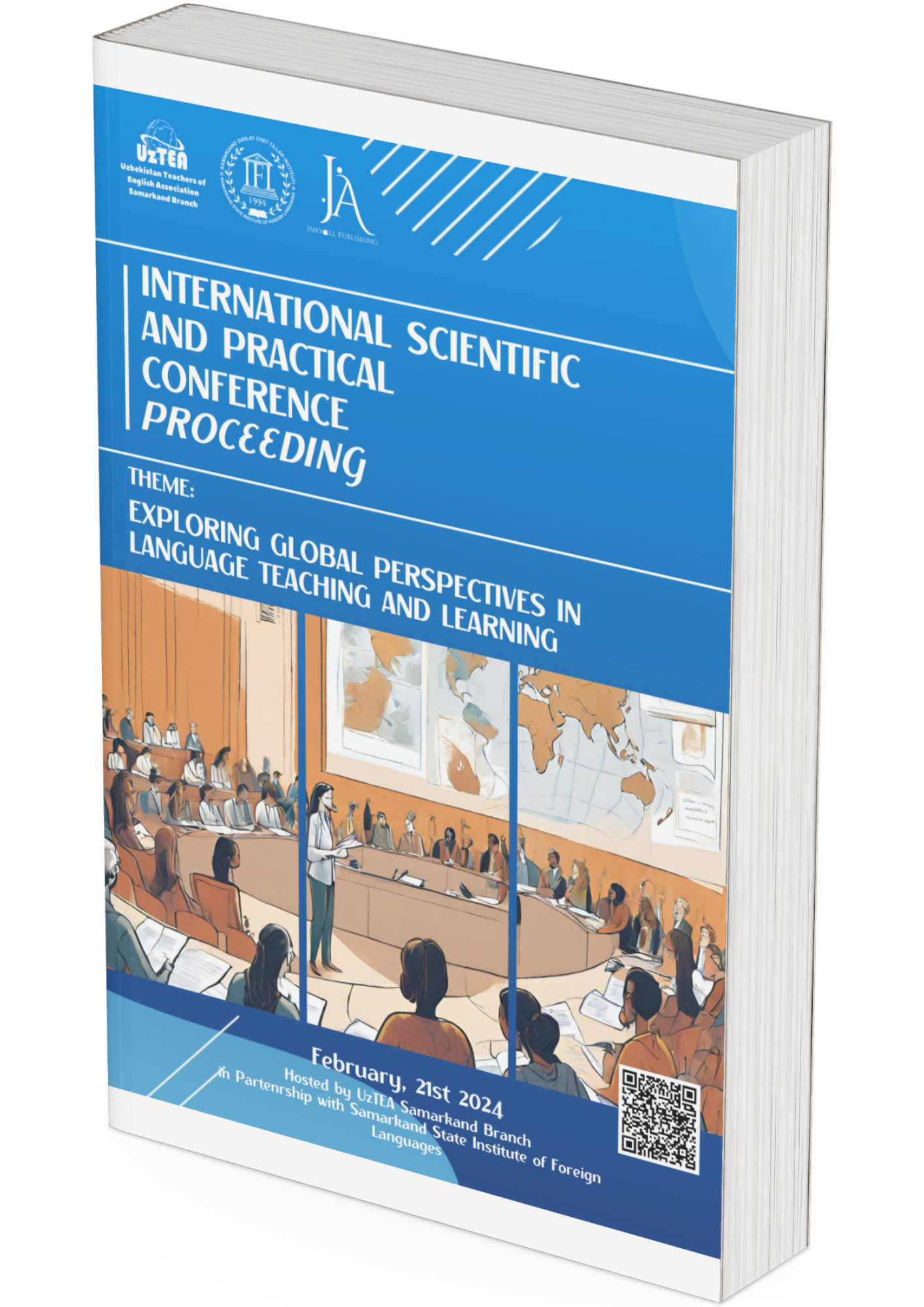
Conference Proceedings Volume
Section
License
Copyright (c) 2024 Salavat Khusnetdinov (Author)

This work is licensed under a Creative Commons Attribution 4.0 International License.
How to Cite